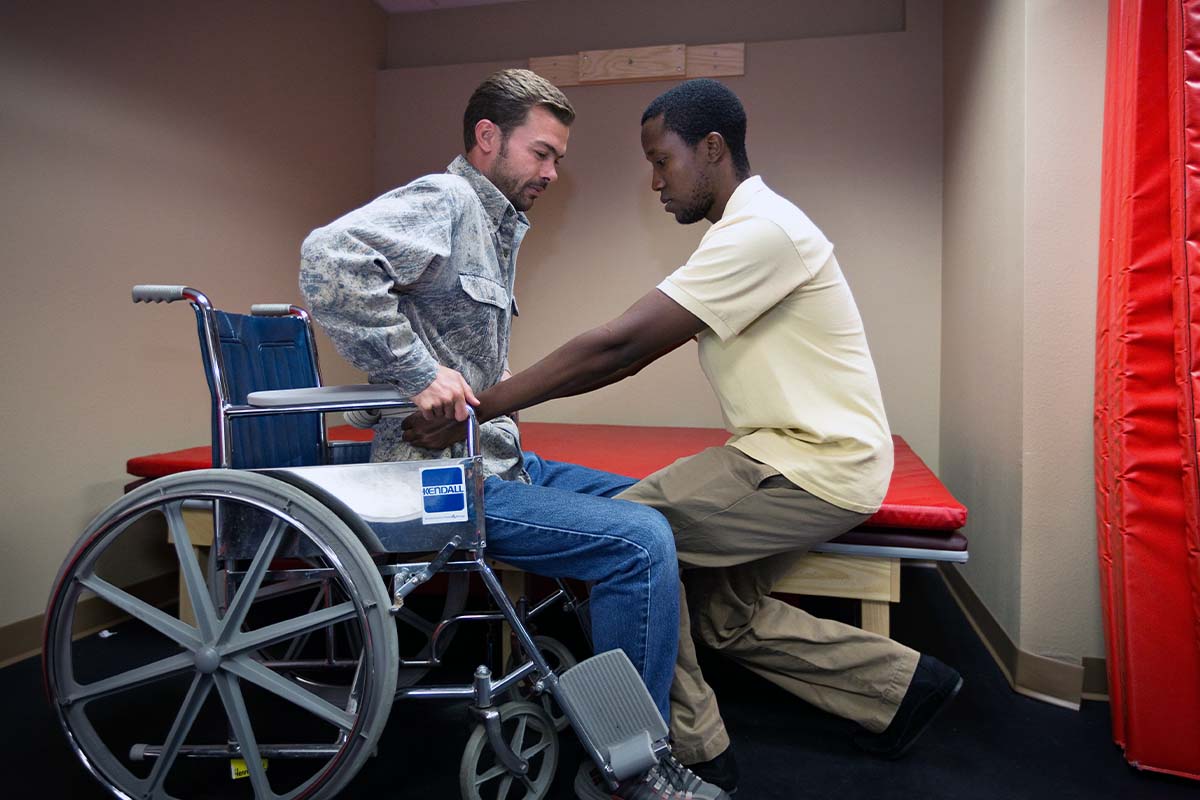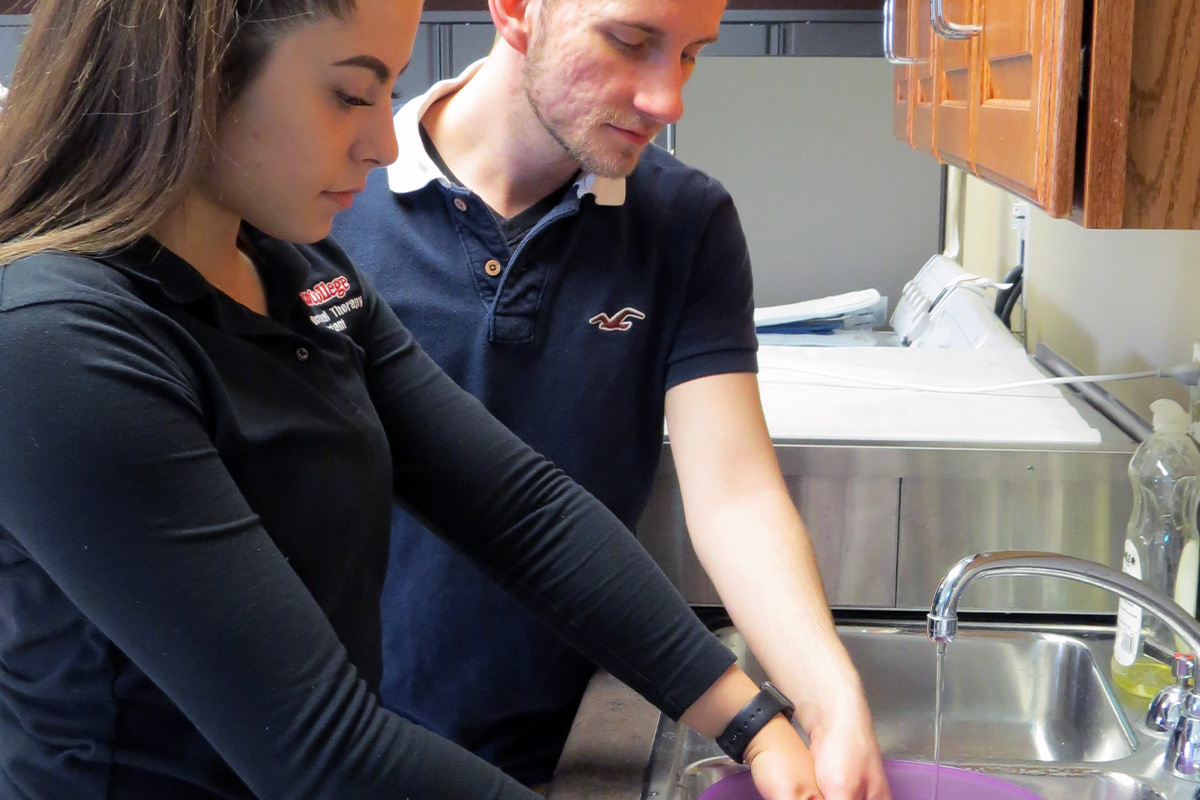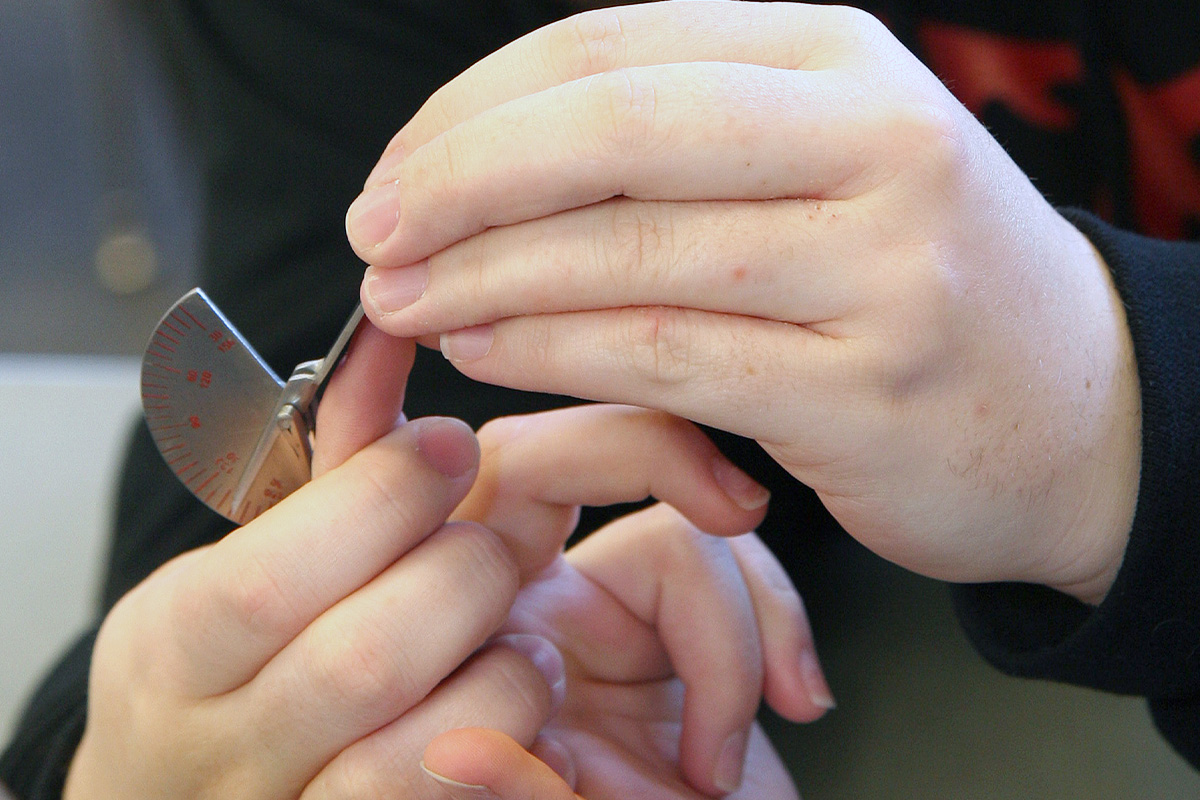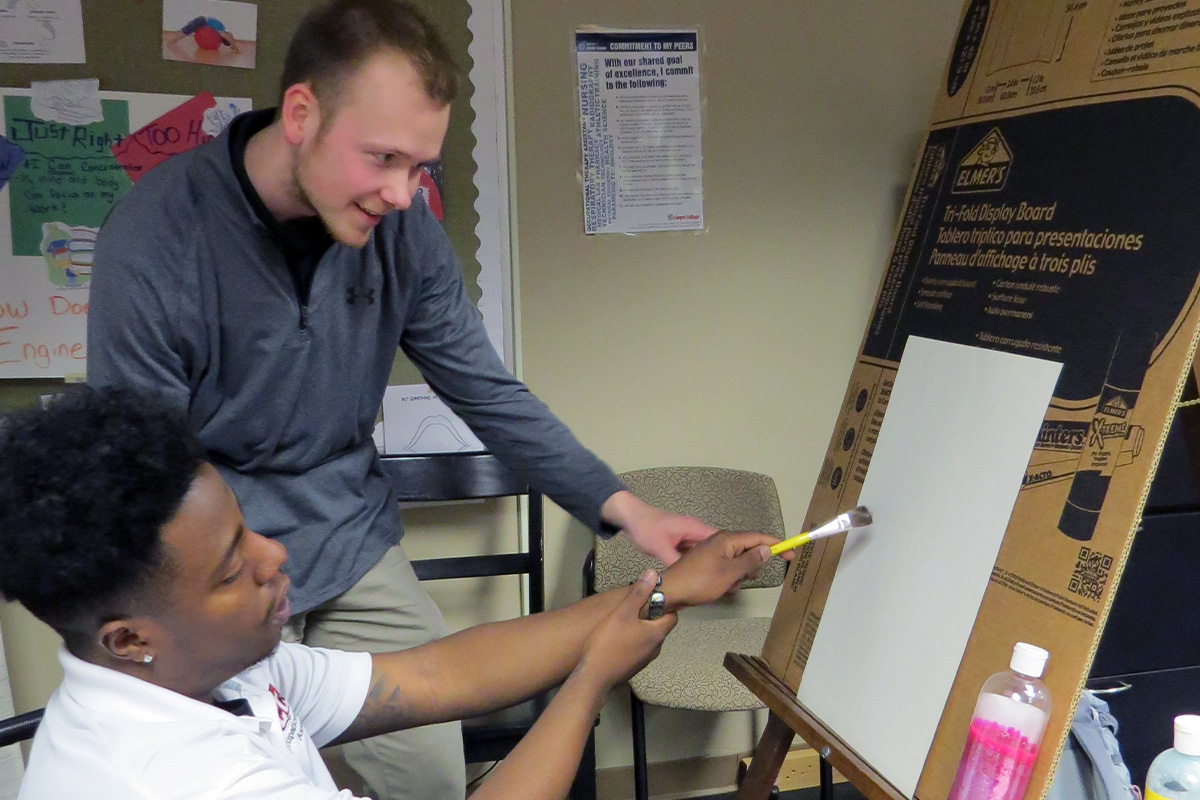

Help others reclaim their independence and “take flight” with the Casper College occupational therapy assistant (OTA) program. Occupational therapy assistants are the hands-on partners in the rehabilitative process, working with individuals of all ages whose ability to perform daily tasks has been impaired by injury, illness, or developmental challenges. Whether you are a traditional student passionate about healthcare or a nontraditional learner looking for a rewarding, people-centered career change, our program provides the technical and clinical foundation you need.
We offer a professional Associate of Science (A.S.) degree designed to prepare you for national certification and immediate entry into the healthcare workforce.
Casper College is a national leader in “affordable excellence,” consistently ranking as one of the best values for higher education in Wyoming. We are committed to helping you understand the investment you are making in your future by providing transparent cost information and personalized support. While individual costs vary based on residency and course load, many students use a combination of federal grants, the Hathaway Scholarship, and other funding sources to help manage their educational expenses.
We encourage you to use our net price calculator and contact our financial aid office for a customized estimate of your costs and aid eligibility.
As a Certified Occupational Therapy Assistant (COTA), you will be eligible for diverse roles in Wyoming’s growing healthcare and education sectors.
The Casper College OTA program is fully accredited by the Accreditation Council for Occupational Therapy Education (ACOTE). Graduates are eligible to sit for the national certification examination administered by the National Board for Certification in Occupational Therapy (NBCOT). After successful completion of this exam, the individual will be a Certified Occupational Therapy Assistant (COTA).
While the A.S. in OTA is a career-ready degree, it also serves as a foundation for further education. Through a unique partnership with the University of North Dakota, Casper College students have the opportunity to earn an entry-level Master’s Degree in Occupational Therapy right on the Casper College campus. This bridge program allows you to advance your career without leaving the community you serve. Learn more at Transfer Agreements.
As a Certified Occupational Therapy Assistant (COTA), you are the creative engine of the therapy team. You work in a collaborative, “intraprofessional” partnership with a Registered Occupational Therapist (OTR). While the OTR directs the initial evaluation, you are the specialist who brings the treatment to life.
What’s the Difference? Registered Occupational Therapist vs. Certified Occupational Therapy Assistant.
| Registered Occupational Therapist (OTR) Visionary | Occupational Therapy Assistant (OTA) The Engine | |
|---|---|---|
| Evaluation | Directs the evaluation and sets the "big picture" goals. Performs the initial evaluation and sets the goals. | Performs standardized assessments and gathers and shares vital client data. |
| Intervention | Has overall responsibility for the treatment plan. | The "Doer": Selects, modifies, and leads the creative occupation based activities that help the client reach their goals. |
| The Progress | Determines when the client is ready for discharge. Signs off on re-evaluations and discharge summaries. | Provides the data and functional evidence of the client’s progress. The "Reporter": Documents daily progress and functional improvements. |
The Occupational Therapy Assistant Program began offering class in 1996 and graduated its first class in 1997, with initial ACOTE accreditation obtained in 1997. August 2022, Casper College continued its full ACOTE accreditation status with the next onsite evaluation scheduled for 2031/2032.
Feedback from fieldwork sites and employers indicated the graduates are well prepared for the positions they have been hired to work. The Casper College Occupational Therapy Assistant program is accredited by the Accreditation Council for Occupational Therapy Education (ACOTE) of the American Occupational Therapy Association (AOTA), located at 7501 Wisconsin Avenue, Suite 510E Bethesda, MD 20814. The AOTA’s phone number and website are 301-652-AOTA (2682), www.acoteonline.org.
NOTE: To ensure that occupational therapy practitioners meet ethical and professional standards prior to entering the profession, all applicants for initial certification are required to provide information and documentation related to any illegal, unethical or incompetent behavior. Persons with a felony history may not be eligible to sit for the certification examination. When you apply to write the certification examination with the National Board of Certification of Occupational Therapy, you will be asked to answer questions related to the topic of felonies. For further information on these limitations, you can contact NBCOT at:
| Graduation Year | Students Entering/Graduating | Graduation Rate | # Students who took NBCOT | NBCOT Pass rate |
|---|---|---|---|---|
| 2025 | 7/6 | 85.71% | 3 | 67% |
| 2024 | 8/8 | 100% | 6 | 100% |
| 2023 | 9/7 | 77.7% | 10 | 100% |
| Total last 3 years | 24/21 | 87.5% |
Graduates of the Casper College occupational therapy assistant program are eligible to sit for the National Certification Examination for the Occupational Therapy Assistant, administered by the National Board for Certification in Occupational Therapy (NBCOT®). After passing the exam, graduates become Certified Occupational Therapy Assistants (COTAs). All states also require licensure to practice, and state licensure is usually based on NBCOT certification exam results. A felony conviction may affect a graduate’s ability to take the NBCOT certification exam or obtain state licensure.
To be eligible for graduation from the OTA Program and to sit for the NBCOT certification exam, students must:
The Occupational Therapy Assistant program at Casper College spans six consecutive semesters. The Casper College OTA program is designed as primarily on-campus learning, yet we recognize that students require flexibility and that the modern healthcare professional must be knowledgeable of technology. To balance these needs, our curriculum utilizes a “Hybrid Model” that blends traditional face-to-face instruction with distance education components.Your experience begins with flexibility for the first fall semester. This allows you to explore the OTA profession in a way that fits your initial schedule.Once you are formally admitted to the program, in Spring, the schedule becomes more structured but remains mindful of your time.
The journey is structured into two distinct phases to ensure student readiness and success:
By starting with foundational courses in the Fall, you have the opportunity to explore the profession and build a strong academic base before entering the rigorous clinical portion of the program. With a faculty-to-student ratio of 1:12, you are supported by individual attention from the very first day of your official January start.
Below are the estimated semester-by-semester costs for students in the Casper College occupational therapy assistant program. Note: This assumes the in-state tuition rate; not out-of-state or WUE. Fees are subject to change. Housing, meals, and fieldwork costs are not included.
| Semester | Tuition | Student fee | Books and supplies | Sub-Total |
|---|---|---|---|---|
| Fall Year 1 | $2,446 | $758 | $2,905 | $6,109 |
| Spring Year 1 | $2,162 | $485 | $524 | $3,171 |
| Summer Year 1 | $959 | $75 | $480 | $1,514 |
| Fall Year 2 | $2,025 | $103 | $567 | $2,695 |
| Spring Year 2 | $2,436 | $60 | $647 | $3,143 |
| Summer Year 2 | $822 | $0 | $0 | $822 (Students are off campus during this time, completing their level II fieldwork rotations.) |
| Total | $17,454 | |||
| Semester | Delivery Model Highlights | Critical Attendance Notes |
|---|---|---|
| Fall (Preparatory) | Flexible (Online, Face-to-Face, or Hybrid) | |
| Spring (Year 1) | Balanced Hybrid: 2 Hybrid & 2 Face-to-Face courses. | Thursday "On-Call" required. |
| Summer (Year 1) | Blended: 1 Hybrid & 1 Distance Education course. | Special Requirement: Mandatory "Grief Camp" (COTA 2150). Dates provided by Spring Break. |
| Fall (Year 2) | Lab Intensive: 3 Face-to-Face & 2 Hybrid courses. | Thursday "On-Call" required. PLUS additional days as assigned for Level I Fieldwork. |
| Spring (Year 2) | Lab Intensive: 3 Face-to-Face & 1 Distance course. | Thursday "On-Call" PLUS additional days as assigned for Level I Fieldwork. |
| Final Term | Clinical Immersive: 100% In-person Fieldwork. | Academic components delivered via Distance Education (Moodle). |
Theresa Robinette, Melissa Neff, and Cassady Hoff worked together to provide me with a robust education that prepares me for real-life therapy situations and treated me with a lot of compassion and understanding.”
Hannah

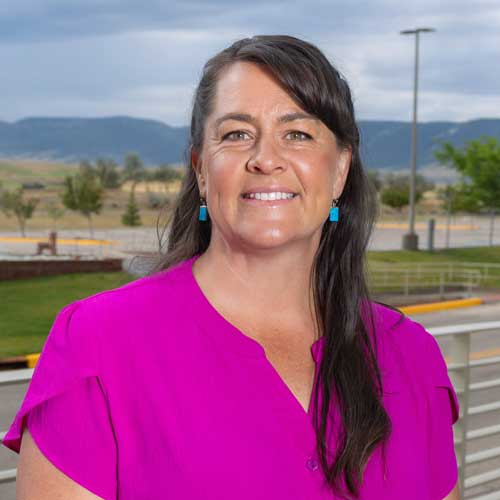
Program Director; Occupational Therapy Assistant Instructor
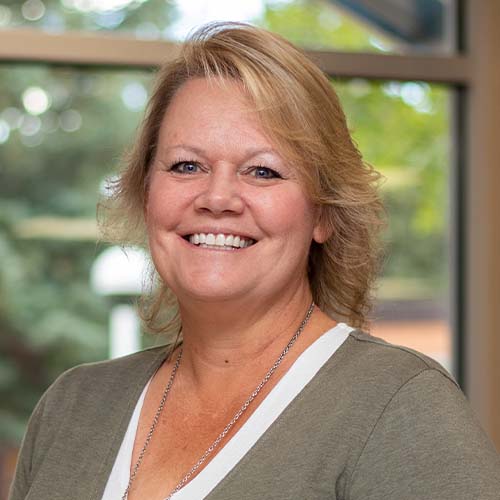
Occupational Therapy Assistant Instructor
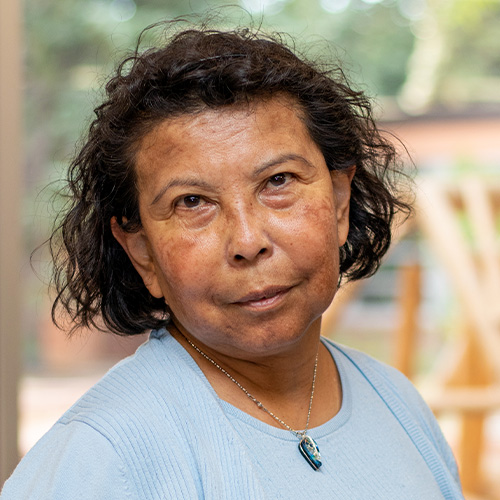
Academic Assistant; School of Health Science

Dean; School of Health Science
This is a current notification for everybody viewing the site